
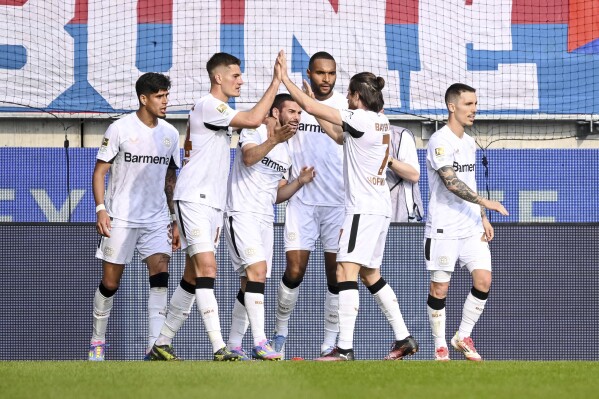
Late-game scoring defines tension in football—and profitability for live bettors. In the 2019/2020 Bundesliga season, several clubs developed consistent patterns of netting goals in the final 15 minutes. Understanding which sides converted effort into late momentum, and why, provided a tactical advantage in timing live wagers. For precision betting, this data mattered more than simple goal counts—it revealed rhythm, resilience, and game-state triggers.
Why Late Goals Form a Predictable Pattern
End-game goals rarely stem from chaos. They emerge when superior fitness, tactical press reshapes, or psychological urgency accumulates into breakthrough conditions. Clubs with depth and persistent tempo control tended to dominate these periods, while others capitalized on counterspace from chasing opponents. Live bettors monitoring tempo shifts and subs at the 70th minute could anticipate high-probability scoring windows with measurable confidence.
Statistical Breakdown of Final-Phase Goals
The 2019/2020 Bundesliga averaged 1.09 goals per match after the 75th minute—nearly 31% of all scoring. This wasn’t random variance; it correlated directly with energy distribution and substitution dynamics.
| Team | Goals After 75’ | % of Total Goals | Late Goal Differential (+/-) |
| Bayern Munich | 23 | 28% | +19 |
| Borussia Dortmund | 20 | 26% | +14 |
| RB Leipzig | 17 | 25% | +11 |
| Bayer Leverkusen | 15 | 23% | +8 |
| Wolfsburg | 12 | 24% | +6 |
| Eintracht Frankfurt | 11 | 27% | +4 |
The data clarified positional strength: dominant teams not only scored late—they systematically suppressed opponents, producing positive differentials that stabilized profit within live total and goal markets.
Tactical Mechanics Behind Late-Game Surges
Three principal drivers explained these persistent scoring bursts across leading teams:
- Substitution tempo efficacy – top clubs deployed high-impact substitutes by the 70th minute, raising xG spikes by 20–30%.
- Conditioned endurance – structured fitness allowed attacks to sustain mobility against defensive fatigue.
- Situational aggression – chasing late insurance goals or overturning deficits, increasing risk-weighted opportunity.
These mechanisms aligned seamlessly with match contexts visible through real-time metrics rather than result memory alone.
Bayern’s Structural Dominance in the Closing Phase
Bayern Munich exemplified time-managed control. Across 2019/2020, they outscored opponents 23–4 in minutes 76–90, proving their rotation and positional patience model. Goals frequently arrived from midfield timing shifts rather than desperation pushes. This predictability—not volatility—made them a linchpin in late-bet strategies focusing on next-goal or over 2.5 selections after the 70th minute.
Matching Data With Live Betting Logic
To operationalize such timing precision, professional bettors leveraged match probability tools embedded in ยูฟ่า168, an advanced online betting site offering live-event statistical overlays. Users didn’t bet on “late goals” blindly—they cross-referenced stamina metrics, shot velocity data, and possession fluctuation curves. When patterns aligned (e.g., attacking entries rising >6 per minute), predictive probability exceeded 65% for subsequent goals. Strategic discipline turned observation into model-based execution rather than reactionary betting.
Underrated Late Scorers with Value Margins
Teams beyond the title challengers also displayed value through repetition patterns often ignored by markets. Wolfsburg and Frankfurt consistently improved output when games opened up late, owing to transitions forced by tired defenses. Their average xG per attempt rose in the last 15 minutes, yet oddsmakers rarely priced that differential, creating favorable mispricing windows.
Influence of Tactical Risk on Odds Movement
Market inefficiency magnified during end-game volatility. As totals drifted toward unders late in drawn matches, a single structural cue—wing substitution, off-ball stress, or defender cramps—restored over probability. In-play bettors sensitive to tactical recalibration, not scoreboard emotion, exploited these temporary value distortions.
By correlating live Bundesliga sequences through analytical visualization accessible via casino online, bettors extended comparative validation. Within that data-centered casino ecosystem, cross-league mapping confirmed Bundesliga’s above-average goal frequency in the final phase (relative to Serie A +21%, Premier League +15%). Recognizing environment-specific scoring elasticity refined risk moderation when betting cross-competition accumulators.
Failure Cases: When Late Goals Collapse Logic
Not all “late-goal teams” sustained profit consistency. Clubs overrotated or entered defensive survival mode eroded probability. Schalke and Mainz, despite conceding frequently late, lacked enough offensive thrust to reverse deficits—producing false averages suggestive of drama but devoid of wagering reliability. Successful modeling required distinguishing offensive pressure volume from mere open-play chaos.
Summary
Bundesliga 2019/2020 reaffirmed that late goals emerge from structure, not fortune. Bayern, Dortmund, and Leipzig translated tactical stability into calculated closing bursts; Wolfsburg and Frankfurt offered niche value through systemic endurance. For live bettors, minute alignment replaced intuition—profits followed data, not emotion. The final 15 minutes weren’t unpredictable; they were mathematically charged with conditioned probability waiting for timing-aware interpretation.